Could Boiler Grants Pay for Your Heating Upgrade?
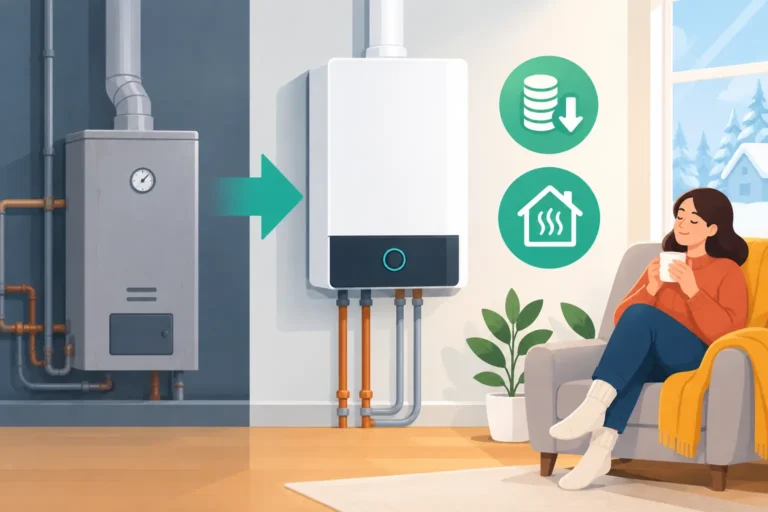
A cold home is not just uncomfortable. It can mean higher monthly bills, damp rooms and a heating system that struggles whenever temperatures drop. Boiler grants may help eligible households replace inefficient heating or make wider improvements without the large upfront cost that normally puts essential work out of reach.
For many households, the most useful starting point is not choosing a boiler. It is finding out which improvements their property needs, whether funding is available and what support they may qualify for. That is where a free eligibility check and home assessment can make the process clearer.
What are boiler grants?
Boiler grants are funding opportunities designed to help qualifying households improve the energy efficiency of their homes. In practice, they may be available through government-backed schemes such as ECO4, subject to current funding availability and eligibility rules.
The aim is simple: reduce energy waste in homes that are expensive to heat. An old non-condensing boiler can use more fuel than a modern system, while poor insulation lets valuable heat escape through walls, lofts and floors. Replacing heating without addressing heat loss is not always the best answer, which is why a grant-funded package may include more than one measure.
Depending on the home and funding route, support could contribute towards a replacement boiler, first-time central heating, heating controls, insulation or an air source heat pump. Some eligible households can receive fully funded improvements, but this depends on the property, household circumstances and the measures approved following assessment.
Who could be eligible for boiler grants?
Eligibility is based on more than income alone. Funding is generally targeted at homes that are inefficient to heat and households that meet scheme criteria. Homeowners and private tenants may be able to apply, although private tenants will usually need their landlord’s permission before work can go ahead.
You may want to check if you receive qualifying benefits, are part of the Warm Home Discount core group, or meet your local authority’s eligibility criteria. Your property’s energy performance also matters. Older homes with low Energy Performance Certificate ratings, outdated heating or little insulation are often the homes where energy-efficiency measures can make the greatest difference.
A household does not need to understand every funding rule before asking for help. The rules can be detailed, and they can change. A proper eligibility check looks at the information that matters, then explains whether a funded route is likely to be available.
It is also worth being realistic about the outcome. Not every old boiler qualifies for replacement, and not every property is suitable for the same technology. A home with a working but inefficient boiler may first need insulation or heating controls. A property without an existing central heating system may be better suited to first-time central heating support. The right measure depends on how the home currently performs.
How boiler grants typically work
The process should feel manageable, not like another complicated form to complete. It usually begins with an initial check of your household circumstances, tenure and property details. This is a free opportunity to see whether there may be a suitable funding route before arranging work.
If the first check is positive, the next stage is a property assessment. An assessor considers the existing heating system, insulation, ventilation and likely energy-efficiency rating. This step is valuable because it identifies the improvements that will make the most practical difference to comfort and running costs.
The funding application can then be prepared using the assessment findings. At Vellurex, we handle your ECO4 paperwork and help coordinate the process from eligibility check through to funding approval and installation. That means you have a clear point of contact rather than being left to work through technical requirements on your own.
Once work is approved, installation is arranged by qualified professionals. Timescales vary according to the survey findings, funding approval and installer availability, so it is sensible not to make plans around a fixed installation date until approval is confirmed.
A new boiler is not always the whole solution
When heating bills are high, replacing the boiler can seem like the obvious fix. Sometimes it is. A modern, efficient boiler can improve reliability and use less energy than an old non-condensing model. However, heat that escapes quickly from an uninsulated home still has to be replaced by the heating system.
That is why boiler grants can sometimes be part of a wider home upgrade. Loft, cavity wall, internal wall or solid wall insulation may be recommended where suitable. Better insulation helps retain warmth for longer, allowing rooms to heat up more easily and reducing the strain on the heating system.
Heating controls can matter too. A programmable thermostat, thermostatic radiator valves and sensible zoning give households more control over when and where they use heat. Small changes to control can support the benefits of larger measures, particularly in homes where some rooms are used far more than others.
For certain properties, an air source heat pump may be considered instead of a boiler. Heat pumps can be an effective lower-carbon option, but they are not a like-for-like choice for every home. They work best when the property is appropriately insulated and the system has been designed around the home’s heating needs. An assessment is the best way to establish whether this is a realistic option.
What to have ready for a free eligibility check
You do not need a folder full of documents to take the first step. Basic details about your address, whether you own or rent the property, your current heating system and household circumstances are usually enough to begin.
If you know your EPC rating, it can be helpful, but do not worry if you do not. The same applies to the age and model of your boiler. An assessor can review the system during the property visit. For tenants, it helps to speak with your landlord early, as permission is needed before improvements can be installed.
Be honest about the problems you are experiencing. Mention rooms that are hard to heat, condensation, boiler breakdowns, draughts or bills that feel unaffordable. These details help build a clearer picture of the property and ensure the recommended measures address the issue you actually live with.
Common questions about boiler grants
Will I need to pay anything?
Some qualifying households may receive fully funded measures. However, funding levels and requirements vary, so this can only be confirmed once eligibility and the property assessment have been completed. You should be told clearly what work is proposed and whether any contribution is required before proceeding.
Can private renters apply?
Private renters may be eligible where they meet the relevant criteria and their landlord agrees to the work. The property must also meet scheme requirements. Funded improvements can benefit both the tenant, through a warmer home and lower energy use, and the landlord, through a more efficient property.
Can I choose any boiler I want?
Grant funding is designed around suitable energy-efficiency measures rather than a retail choice of every boiler model. The proposed system must be appropriate for the property and meet funding standards. This approach helps ensure the work delivers a genuine improvement rather than simply replacing one problem with another.
What happens if I am not eligible?
An eligibility check is still worthwhile. It can clarify why funding is not currently available and highlight practical steps that may improve comfort, such as reviewing heating controls, insulation options or your EPC. There is no benefit in guessing when a quick check can give you a clearer answer.
A warmer, more efficient home can start with one straightforward conversation. If high bills and unreliable heating are putting pressure on your household, checking your eligibility could be the practical first step towards a home that costs less to keep comfortable.





One Comment