Heating Installation Quality Reviews: What to Check
A new heating system should make your home warmer, easier to manage and less expensive to heat. Yet heating installation quality reviews often show that the difference between a good upgrade and a frustrating one comes down to the survey, the fitting and the aftercare – not simply the boiler or heat pump chosen.
For households dealing with high bills, cold rooms or an ageing non-condensing boiler, that distinction matters. A properly planned, professionally installed system can improve comfort for years. Poor workmanship, however, can lead to uneven heating, avoidable breakdowns and wasted energy. Whether your upgrade is privately arranged or supported through ECO4 funding, knowing what quality looks like gives you confidence to move forward.
What heating installation quality reviews can tell you
Reviews are useful when they describe the actual customer experience rather than only saying that an installer was “great”. Look for comments about the home survey, punctuality, cleanliness, communication and whether the system performed as promised after installation.
The strongest reviews often mention specific outcomes: radiators that now heat evenly, a home that feels warmer, clear instructions on using the controls, or a team that resolved an issue promptly. These details suggest that the company did more than complete the visible fitting work.
It is also worth checking how recent reviews are and whether they reflect work similar to yours. A customer replacing a modern boiler in a well-insulated house may have different needs from a household receiving first-time central heating or insulation alongside a heating upgrade. Reviews should give you a picture of consistency, not just a single excellent result.
A low number of negative reviews is not automatically a concern. What matters is how the business responds. A clear, respectful response that explains the next step and puts things right can be more reassuring than a page of vague five-star ratings.
Quality begins before the installer arrives
The installation day is only one part of a successful heating upgrade. A good provider starts by understanding the property, how it loses heat and how the household uses it.
During an assessment, the surveyor should consider the age and layout of the home, existing heating equipment, radiator condition, insulation levels and any ventilation needs. They should also ask practical questions. Are some rooms consistently cold? Is there limited hot water at busy times? Does anyone in the home need a steady, comfortable temperature for health reasons?
This matters because a heating system should be sized and designed for the property. Installing a larger appliance than necessary does not guarantee a warmer home. It can increase running costs and cause the system to operate inefficiently. Equally, a system that is too small may struggle during colder weather.
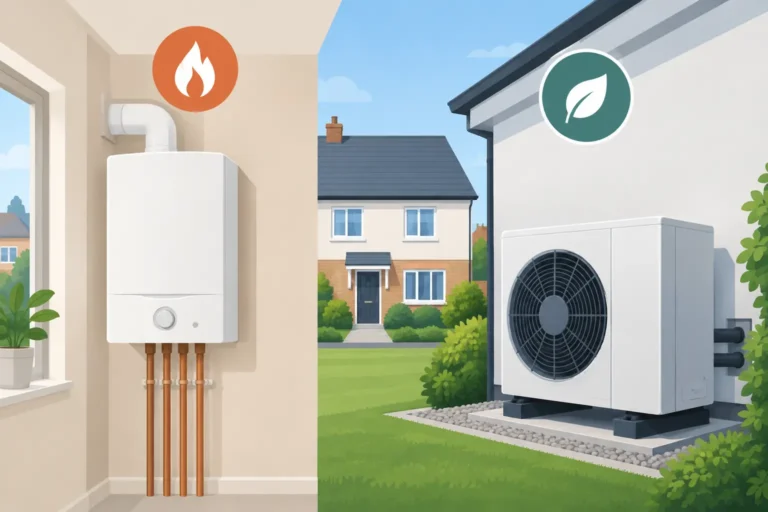
For air source heat pumps, this planning is especially important. Heat pumps work most effectively when the property retains heat well and the heat distribution system is suitable. Insulation improvements, correctly sized radiators and sensible control settings can all affect results. An honest assessment should explain where additional measures may be needed rather than promising the same outcome for every home.
Signs of a high-quality heating installation
When the work is underway, quality is not always obvious at a glance. Pipes may be hidden, and the system may look neat even if crucial checks have been missed. Still, there are several practical signs that the job is being handled properly.
A professional team will protect floors and working areas, explain what is happening and keep disruption to a minimum. They should raise any unexpected issue with you before changing the agreed scope of work. Older homes can reveal problems such as unsuitable pipework, inaccessible areas or electrical work that needs attention. These issues should be managed openly, not ignored.
The installer should also complete the essential safety and performance checks. For a gas boiler, this includes appropriate testing and registration by a Gas Safe registered engineer. For a heat pump, you should expect competent installation, commissioning and the relevant documentation. Requirements can vary by system and funding route, but you should never be left uncertain about who installed the equipment or how it was tested.
A quality installation also includes balancing and commissioning the heating system. In simple terms, this means checking that heat is reaching radiators properly and that the controls are set up to work as intended. If the living room becomes too hot while a bedroom remains cold, the system may need adjustment. This is not a minor finishing touch – it is part of making your investment deliver comfort and savings.
Questions to ask when comparing heating installation quality reviews
Reviews are most useful when combined with a few direct questions. Before agreeing to an installation, ask how the provider assesses the home, who will carry out the work and what happens if an issue appears after completion.
You can also ask what documents you will receive, how the new controls will be explained and whether there is a clear point of contact after the installation. A trustworthy provider will answer in plain English. You should not feel pressured to accept technical language you do not understand.
If the work is funded, ask what is covered and whether the recommended measures depend on the assessment outcome. ECO4 support is designed to help eligible households improve energy efficiency, but funding is not a one-size-fits-all offer. Eligibility, property condition and the measures considered suitable all play a part. A responsible service provider will set realistic expectations and explain the process clearly.
At Vellurex, this starts with a free eligibility check and property assessment. We handle your ECO4 paperwork and help coordinate the journey from funding approval to installation, making the process simpler and less stressful for eligible households.
Do not judge the work on day one alone
A new system may take a little time to settle, particularly if you are learning new controls or moving from an old boiler to a more efficient heating setup. That said, you should know what normal operation looks like and who to contact if something does not seem right.
Before the installer leaves, make sure you understand how to adjust the temperature, programme timings if applicable and recognise any warnings on the controls. Keep all certificates, manuals and commissioning information in a safe place. These records may be useful for warranties, future servicing or selling the property.
Pay attention over the first few weeks. Are rooms warming up at the expected times? Is hot water available when needed? Are there unusual noises, leaks or error messages? Small concerns are usually easier to resolve early, so report them promptly rather than waiting for the next service.
It is sensible to remember that lower bills are influenced by more than the heating appliance. Your tariff, how warm you keep the home, household routines and insulation all affect energy use. A high-quality upgrade gives you a stronger foundation, but it cannot remove heat loss through poorly insulated walls, lofts or draughty areas on its own.
A better standard for funded home improvements
There can be understandable hesitation around fully funded work. Some households worry that a grant-supported installation will involve shortcuts, hidden costs or complicated forms. In reality, the right support should do the opposite: remove the upfront financial barrier while maintaining clear standards for assessment, installation and customer care.
The best heating installation quality reviews reflect this. They show that customers were treated with respect, understood the work being carried out and were left with a home that is more comfortable to live in. Good service is not only about fitting equipment quickly. It is about matching the right improvement to the home and making sure the household can use it confidently.
If your current heating is unreliable, costly or no longer keeping your home comfortable, do not let uncertainty about the process stop you from asking for help. A free eligibility check and a careful home assessment can show what may be possible, while the right questions and credible reviews can help you feel confident about the standard of work you deserve.