
First Time Central Heating Grants UK Explained
Cold rooms, high bills and portable heaters should not be a normal part of home life. For households without a working central heating system, first time central heating grants UK support may provide a practical route to a warmer, more affordable home without the usual upfront installation cost.
The main source of support is often the government-backed Energy Company Obligation scheme, known as ECO4. It is designed to improve less energy-efficient homes and help qualifying households reduce the cost of keeping warm. Funding can cover suitable heating and insulation measures, but eligibility and the final package are always based on the household, property and assessment outcome.
What is a first time central heating grant?
A First Time Central Heating grant is intended for eligible homes that do not already have a central heating system. In simple terms, it can help fund the installation of a new, efficient system where a property has relied on electric storage heaters, room heaters, electric panel heaters, gas fires, portable heaters or another inadequate arrangement.
A typical installation may include a new boiler or another suitable heat source, radiators, pipework and heating controls. The exact measures depend on what is appropriate for the property. A surveyor will consider the existing heating, the home’s energy performance, insulation levels and practical requirements before a recommendation is made.
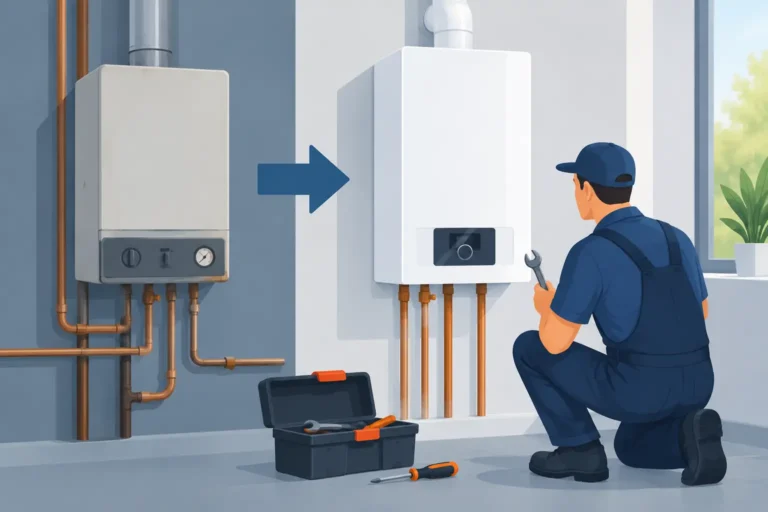
This is not simply about replacing an old boiler. If a home already has a wet central heating system with radiators and pipework, a boiler replacement grant or another ECO4 measure may be more relevant. The distinction matters because the funding route and available work can differ.
Who may qualify for first time central heating grants UK?
ECO4 support is aimed at households that need it most, especially people living in homes that are expensive to heat. You may be eligible if you own your home or rent privately, although private tenants will need the landlord’s permission before work can go ahead.
Eligibility is commonly linked to qualifying benefits, including certain income-related benefits. Some households may also qualify through the Warm Home Discount core group or through their local authority’s flexible eligibility route, often called ECO4 Flex. This can help households on a lower income, those facing high energy costs, or people in vulnerable circumstances who do not receive a qualifying benefit.
Your property also needs to be suitable. ECO4 focuses on homes with poor energy efficiency, and the funding provider will need to confirm that the proposed improvements offer a genuine benefit. A free assessment helps establish whether First Time Central Heating is the right measure or whether insulation, boiler work or a heat pump would make more sense.
Funding is not automatic, even where a household receives benefits. The available grant support can depend on the property’s condition, energy rating, current heating arrangement, location and scheme rules at the time of application. An honest eligibility check is the best place to start.
Homes that often need extra attention
Older properties can lose heat quickly through uninsulated lofts, solid walls, draughty areas or poorly performing windows. Installing a new heating system in a home that leaks warmth may not deliver the savings a household expects.
For that reason, insulation measures can sometimes be included alongside heating improvements. Loft, cavity wall, internal wall or solid wall insulation may be considered where suitable. This approach helps the new system heat the home more effectively, improves comfort and can reduce the risk of spending money warming heat that immediately escapes.
What can ECO4-funded central heating include?
Every home is different, so there is no one standard package. Where approved, First Time Central Heating work can include the components needed to create a safe, usable and efficient system. That may involve a heating unit, radiators, pipework, thermostat controls and associated installation work.
The installer and funding team will assess the best option for the property. In some homes, a gas boiler may be appropriate where a gas connection is available. In others, an air source heat pump or an electric heating solution may be considered, particularly where gas is not practical. Heat pumps can be highly efficient, but they work best in homes with suitable insulation and enough space for the equipment. They are not the right answer for every property.
A good recommendation should balance comfort, running costs, the home’s layout and long-term efficiency. The aim is not to fit the most complicated system. It is to provide an improvement that works reliably for the household.
The simple route from eligibility check to installation
Grant applications can sound daunting, especially when you are already managing rising household costs. The process is more manageable when it is broken into clear stages.
First, an eligibility check reviews your household circumstances, tenure and current heating. You will usually be asked for basic details about the property and any qualifying benefits or local authority criteria. This initial conversation can quickly show whether it is worth progressing.
Next comes a free property assessment. A qualified assessor looks at the existing heating system, insulation, energy performance and the improvements that could be suitable. This step is vital because it ensures the proposed work matches the actual condition of the home rather than relying on assumptions.
Finally, the ECO4 paperwork is prepared and submitted for funding approval. Once approval is in place, installation can be arranged. At Vellurex, we handle your ECO4 paperwork and help coordinate each stage, making the process simple and stress-free from the first check through to completed work.
Timescales vary. They can be affected by survey availability, evidence requirements, technical details at the property and funding approval. It is sensible to ask what documents are needed early on, as supplying them promptly can help avoid unnecessary delays.
What you may need to provide
The evidence needed depends on the eligibility route, but the funding team may ask for proof of identity, address, homeownership or tenancy, benefit entitlement, income information or landlord consent. You may also need to confirm who pays the energy bills.
Private renters should speak to their landlord as soon as possible if they are interested in a grant. The landlord cannot normally be forced to accept the work, but many are willing to consider improvements that make their property warmer, more efficient and more appealing to tenants. Any work should be agreed before installation is booked.
Be cautious if anyone promises guaranteed funding before asking about your home or circumstances. Genuine ECO4 support requires checks and an assessment. A reputable provider will explain what is known at each stage, what still needs confirming and whether there could be any contribution required. Many eligible installations are fully funded, but this must be confirmed for your individual case.
Will a new system lower your energy bills?
A properly designed central heating system can make a substantial difference to comfort and may lower heating costs compared with inefficient electric room heating or an outdated setup. Savings will vary, though. They depend on energy prices, how much heating you currently use, the size and insulation of the property, and how the new system is controlled.
Heating controls are often overlooked. A programmable thermostat and radiator controls can help you heat rooms when they are needed rather than heating the whole property at the same temperature all day. Using a system efficiently does not mean sitting in the cold. It means giving your household better control over warmth and spending.
For people who have been avoiding heating because of cost, the value can go beyond a bill reduction. Consistent warmth can make bedrooms, living spaces and bathrooms more usable through winter, while a more efficient home also produces fewer carbon emissions.
Common questions about First Time Central Heating support
Can homeowners and private tenants apply?
Yes, both may be able to apply if they meet the relevant criteria and the property is suitable. Private tenants need the landlord’s permission, while homeowners must be able to provide proof of ownership if requested.
Is the grant a loan that must be repaid?
ECO4 funding is generally a grant, not a personal loan. If approved, you do not repay it as monthly finance. The exact funding terms and any contribution, if applicable, should always be explained before work starts.
Can I apply if I have old storage heaters?
Possibly. Homes using inefficient electric storage heaters or other forms of electric room heating may be considered for First Time Central Heating, depending on the wider eligibility and property assessment.
What happens if central heating is not suitable for my home?
The assessment may identify a different funded improvement, such as insulation, a boiler upgrade or an air source heat pump. The right measure is the one that provides a worthwhile improvement for your home, not simply the one you first expected.
If your home is hard to heat and you are worried about the cost of an upgrade, a free eligibility check can give you clarity without committing you to anything. A warmer home may be closer than you think, and taking the first step could help turn high energy bills into lasting comfort.





I love how straightforward this site keeps things from the moment you land on it. No complicated menus or hidden rules that make you scratch your head. Just a clean space to enjoy some fast paced action without any hassle. Really appreciate the quick customer service too whenever I had a quick question during a busy evening.