
Can I Get a Grant for Central Heating in the UK?
A cold home is not just uncomfortable. It can mean higher gas or electricity bills, damp rooms, and the difficult choice between heating the whole house or only the rooms you use. So, can I get a grant for central heating? In some circumstances, yes. UK funding programmes can help eligible households pay for a first central heating system, replace an inefficient boiler or improve the insulation that helps heat stay where it belongs.
The key is understanding that grants are not usually a simple cash payment for any new boiler or radiators. Funding is normally tied to your household circumstances, the condition and energy performance of the property, and the measures judged most suitable after an assessment. A free eligibility check is the sensible place to start.
Can I get a grant for central heating?
You may be able to get help if your home is hard to heat, you have a low income or receive a qualifying benefit, and the property needs an energy-efficiency improvement. Homeowners and private tenants may both be eligible, although tenants will need their landlord’s permission before work can go ahead.
Historically, the main route for this kind of support in England, Scotland and Wales was the Energy Company Obligation, known as ECO4. It supported measures for lower-income households and homes with poor energy efficiency, including first time central heating, boiler replacements, insulation and low-carbon heating options. ECO4 was scheduled to run until 31 March 2026. If you are reading after that date, do not assume that funding has disappeared or that an older scheme is still accepting applications. Available support can depend on replacement national schemes, local authority programmes and funding in your area.
That is why an up-to-date eligibility check matters. It identifies the funding route currently open to you and avoids wasted time applying for a scheme that has closed or does not cover your postcode.
What does a central heating grant usually cover?
What is funded depends on the home and the programme rules. If a property has never had a wet central heating system, first time central heating support may cover the core work needed to create one. This can include a heat source, radiators, pipework, heating controls and associated installation work.
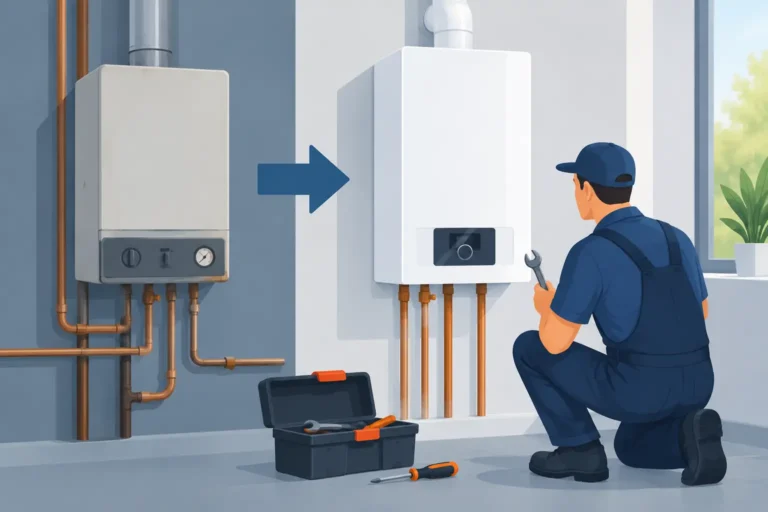
For homes that already have central heating, help may instead be available to replace an old, inefficient non-condensing boiler or address a heating system that is no longer reliable. In other cases, an air source heat pump could be considered where it is suitable for the property and the available funding supports it.
Insulation is often part of the conversation too. Replacing a boiler in a home that loses warmth rapidly through the loft, walls or floor will not solve the whole problem. Loft, cavity wall, internal wall or solid wall insulation can reduce heat loss, helping a new heating system work more efficiently and making rooms feel warmer for longer.
The best option is not always the one you first ask for. A home assessment may show that insulation and heating controls should be installed before, or alongside, a new heating system. This is a practical trade-off, not unnecessary complication: improving the building first can reduce the size of heating system needed and lower future energy use.
Who may qualify for funded heating improvements?
Eligibility varies by scheme, but there are several common routes. Households receiving certain means-tested benefits may qualify. Some people in the Warm Home Discount core group may also meet the criteria. Local authorities can sometimes identify households through flexible eligibility routes, often called ECO Flex, where low income, high energy costs or vulnerability to cold are relevant.
Your property matters as much as your household income. Funding is generally aimed at homes that are less energy efficient, particularly older properties with poor insulation or outdated heating. An assessor will consider the existing system, the type of property, the likely energy savings and whether the proposed work meets current technical standards.
You do not need to be an expert in Energy Performance Certificates, boiler efficiency or grant rules before asking for help. However, it helps to have a clear picture of your situation. Think about whether you own the property or rent privately, what heating you currently have, whether the boiler is old or broken down regularly, and any benefits or energy-bill support you receive.
A private tenant should speak to their landlord early. The landlord’s consent is required for permanent work such as a boiler, radiators, pipework or insulation. Many landlords are happy to consider funded improvements because they can improve the comfort, efficiency and condition of the property without placing the full cost on the tenant.
A grant is not automatic or guaranteed
It is understandable to see the word “grant” and expect a completely free installation. Many qualifying installations can be fully funded, but approval is never automatic. The final decision depends on the programme rules in force, the survey results, available funding, the property and the measures approved for it.
Some homes cannot have every type of improvement. For example, a heat pump may not be practical without changes to insulation or radiator sizes. A replacement boiler might not be funded if another measure would deliver greater energy savings under the relevant scheme. Listed buildings, unusual construction types and access limitations can also affect what can be installed.
A reputable provider should explain this clearly before you agree to anything. You should know what work is proposed, whether there is any customer contribution, what disruption to expect, and how the installation will be checked. Be cautious of anyone who promises approval before asking about your home or circumstances.
What happens during the application process?
The process should be straightforward and stress-free. At Vellurex, it begins with a free eligibility check, followed by a property assessment and funding approval before installation is arranged.
During the initial check, you will normally be asked for basic details about the property, your heating system and your household’s eligibility route. This helps establish whether it is worth moving forward and which support may be relevant.
The home assessment is more detailed. A qualified assessor or surveyor looks at how the property is heated, where heat is being lost and which measures could make the greatest difference. They may inspect the boiler, radiators, loft space, walls and existing insulation. This is not about catching you out. It is about ensuring the proposed improvement is safe, suitable and capable of reducing energy use.
If the assessment supports an application, the provider can handle the paperwork and submit the evidence required by the funding route. Once funding is approved, installation can be scheduled. Timescales vary, particularly where extra surveys, landlord approval or specialist measures are needed, but clear communication should be part of the service.
How to give yourself the best chance of approval
Start with accurate information. Tell the provider if the boiler is unreliable, if you only heat part of the home, or if there is no central heating at all. Small details can affect which measure is appropriate.
Keep relevant documents available, such as proof of home ownership or tenancy, benefit information where applicable, and landlord contact details if you rent. You may not need every document at the first conversation, but having them ready can prevent delays later.
It is also worth thinking beyond the boiler. If your loft is bare, your walls feel cold or certain rooms never warm up, mention it. A combined package of heating and insulation improvements may offer a bigger reduction in bills than replacing one item alone.
Take the next step before another winter passes
There is no benefit in struggling through another cold season because grant rules feel confusing. A quick eligibility check can tell you whether funded central heating, a boiler replacement, insulation or another energy-saving measure may be possible for your home. Even where one route is not available, understanding your options puts you in a stronger position to plan a warmer, lower-cost and greener property.





4 Comments