Best Upgrades for Cold Homes That Cut Heating Bills
A home that never feels warm is rarely solved by simply turning the thermostat up. If heat is escaping through the loft, walls, windows or an ageing heating system, you can pay more for energy while still living with chilly rooms, draughts and damp patches. The best upgrades for cold homes tackle the cause of the problem, helping your property hold onto warmth for longer and reducing the energy needed to heat it.
For many households, the cost of major improvements can feel out of reach. Government-backed ECO4 funding may help eligible homeowners and private tenants access fully funded energy-efficiency measures, with support available from the initial check through to assessment, paperwork and installation.
Start by finding out where your home loses heat
Older UK properties can lose heat in several places at once. A boiler may be working hard, but it cannot compensate for an uninsulated loft or solid external walls that constantly draw warmth out of the house. This is why the right upgrade depends on your property, its current Energy Performance Certificate rating, your heating system and the measures already in place.
A free home assessment is the practical starting point. An assessor can look at the construction of the property, insulation levels, ventilation, heating controls and the condition of your boiler or radiators. This avoids spending money on a single improvement that does not address the biggest source of heat loss.
In general, improving the fabric of the building first makes heating upgrades work more effectively. A well-insulated home needs less heat in the first place, which can mean lower bills and more even temperatures from room to room.
Insulation is one of the best upgrades for cold homes
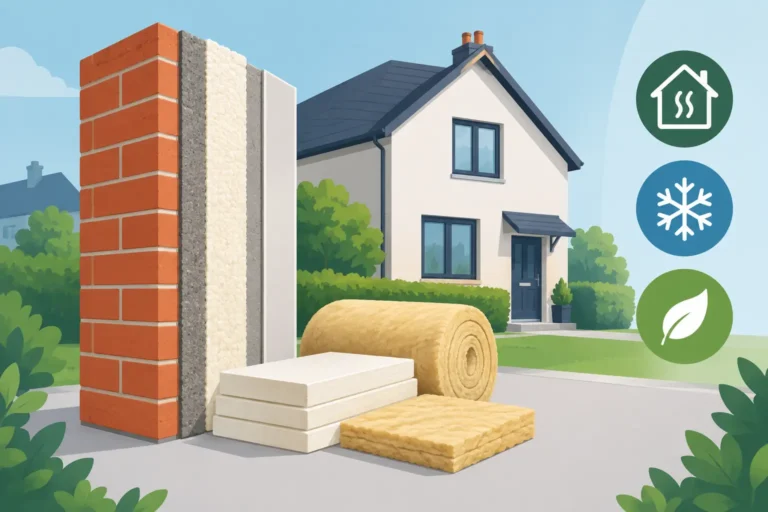
Insulation slows down the movement of heat through your home. It is often the most effective place to begin, especially in properties with old, thin or missing insulation.
Loft insulation
Warm air rises, so an under-insulated loft can be a major source of heat loss. Loft insulation creates a thermal layer above the living space, helping rooms below stay warmer for longer. It is particularly valuable in houses where the loft is accessible and has not been converted into a room.
The trade-off is that loft storage may need to be planned carefully. If you use the area for boxes or suitcases, raised boarding may be needed to avoid compressing the insulation. A proper assessment will identify what is suitable without reducing the benefit of the measure.
Cavity wall insulation
Many homes built with cavity walls have a gap between the inner and outer layers of brickwork. Filling a suitable cavity can reduce heat loss and make external walls feel less cold to the touch.
However, cavity wall insulation is not right for every property. Exposure to driving rain, the condition of the brickwork and the existing wall construction all matter. A professional survey is essential, particularly in coastal or highly exposed areas, to make sure the measure is appropriate.
Internal or solid wall insulation
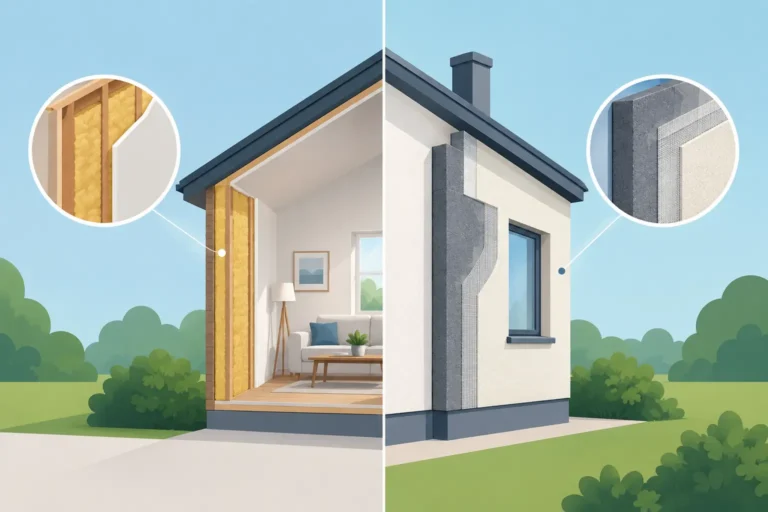
Solid-wall homes, common in many older terraces and Victorian properties, do not have a cavity to fill. They can lose significant heat through their walls, so internal wall insulation can make a noticeable difference to comfort and heating costs.
This work involves fitting insulating material to internal walls, then finishing the surface ready for decorating. It can reduce room dimensions slightly and may require radiators, sockets or skirting boards to be adjusted. For households living in a very cold solid-wall property, though, the improvement can be worthwhile because it addresses one of the largest areas of heat loss.
Upgrade an inefficient heating system
Once your home is better able to retain heat, the next priority may be the system that produces and distributes it. Old non-condensing boilers can waste a considerable amount of energy compared with modern alternatives, especially if they are unreliable, difficult to control or expensive to run.
Boiler replacement and central heating improvements
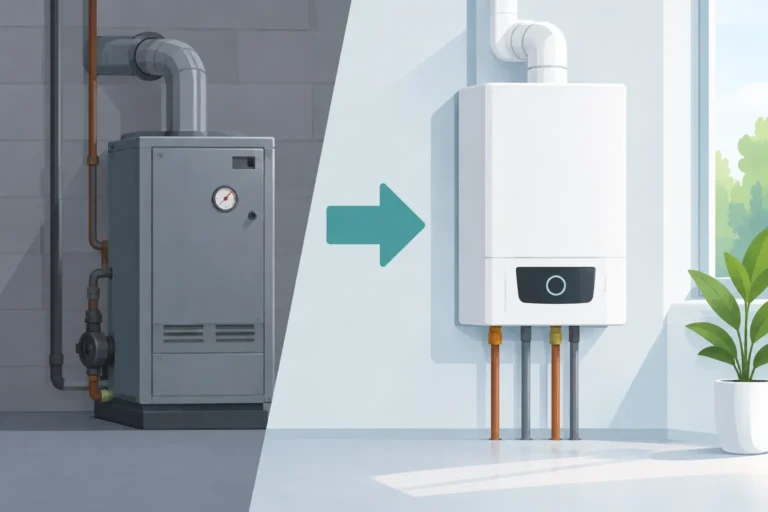
Replacing an old non-condensing boiler with an efficient modern system can improve reliability and help reduce fuel use. Central heating improvements may also include radiators, pipework or controls, depending on what your home needs.
Controls matter more than many people realise. A programmable thermostat and thermostatic radiator valves allow you to heat rooms when they are needed, rather than overheating the whole property. They are not a replacement for insulation, but they help you make better use of the heat you are paying for.
For homes without an existing wet central heating system, a First Time Central Heating grant may be available to eligible households. This can be life-changing for residents relying on costly electric heaters, portable heaters or an old, inadequate system. The suitable option will depend on the property and the funding criteria at the time of assessment.
Air source heat pumps
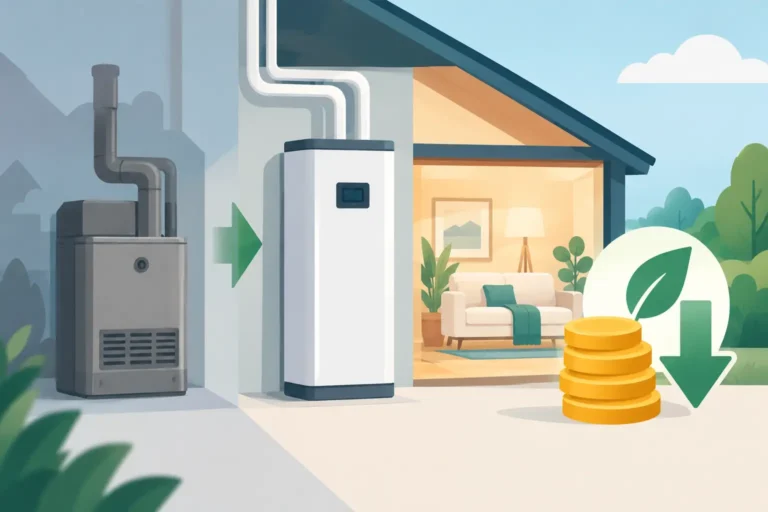
An air source heat pump takes warmth from outside air and uses it to heat your home and hot water. It can be a lower-carbon alternative to a fossil-fuel boiler and is most effective in a property that is properly insulated and has an appropriately designed heating system.
Heat pumps work differently from traditional boilers. They generally provide a steadier, lower-temperature heat over longer periods, rather than a quick burst of very high heat. Some homes may need radiator upgrades or other changes to get the best result. That is why a property assessment is so important before deciding whether a heat pump is the right choice.
Do not overlook draughts, damp and ventilation
Cold homes can feel uncomfortable because of uncontrolled draughts around doors, windows, loft hatches, pipework and floorboards. Sealing obvious gaps can make rooms feel warmer quickly and helps prevent heated air from escaping.
But draught-proofing should not mean blocking necessary ventilation. Kitchens, bathrooms and rooms with open fires or certain gas appliances need suitable airflow. Good ventilation helps manage moisture, reduces condensation and supports healthier indoor air. If you are seeing mould or persistent damp, the cause should be investigated rather than simply covered up.
In some cases, cold surfaces are caused by poor insulation, while in others a leak, damaged guttering or penetrating damp may be involved. The right solution depends on the source of the issue. A careful survey helps ensure improvements protect the building as well as improving comfort.
Could ECO4 funding help pay for your upgrades?
ECO4 is a government-backed scheme designed to improve the energy efficiency of qualifying homes, particularly those with low incomes, high energy costs or poor energy performance. Depending on your circumstances and property, funding may support measures such as loft, cavity wall, internal wall or solid wall insulation, heating improvements, boiler replacement and air source heat pumps.
Eligibility can be linked to certain benefits, the Warm Home Discount core group, or local authority criteria. Private tenants may also qualify, although landlord permission is normally required before work can take place. Funding is subject to eligibility, property suitability and scheme requirements, so no two applications are exactly the same.
The process should be straightforward. First, complete a free eligibility check. Next, a property assessment identifies which measures could make the biggest difference. If funding is approved, the ECO4 paperwork and installation coordination can be managed for you, making the process simpler and less stressful.
Choose improvements that work together
The most effective cold-home upgrades are usually a package rather than a quick fix. Insulation reduces heat loss, a modern heating system produces warmth more efficiently, and sensible controls help you use that heat at the right time. Together, these measures can make a home warmer, lower heating costs and reduce carbon emissions.
If you are struggling to keep your home warm, do not assume you have to fund every improvement yourself. A free eligibility check and home assessment can show what practical help may be available, and give you a clear route towards a warmer, more affordable home.