9 Signs Your Boiler Wastes Energy at Home
A boiler can still produce hot water and heat your radiators while quietly costing far more than it should. The most common signs your boiler wastes energy are not always dramatic: a bill that keeps rising, rooms that never feel quite warm enough, or a heating system that seems to run for hours. In an older UK home, the boiler is often only part of the problem, but it is a sensible place to start.
For households already stretching their budget to cover energy costs, an inefficient heating system can feel like a problem with no affordable answer. The good news is that qualifying households may be able to access fully funded energy-efficiency improvements through ECO4, following an eligibility check and property assessment.
1. Your energy bills are rising without a clear reason
A higher bill is not proof that your boiler is at fault. Energy prices, colder weather, a longer period spent at home and changes to your tariff all make a difference. But if your usage has stayed broadly similar and heating costs have increased year after year, an inefficient boiler could be using more gas to deliver the same level of warmth.
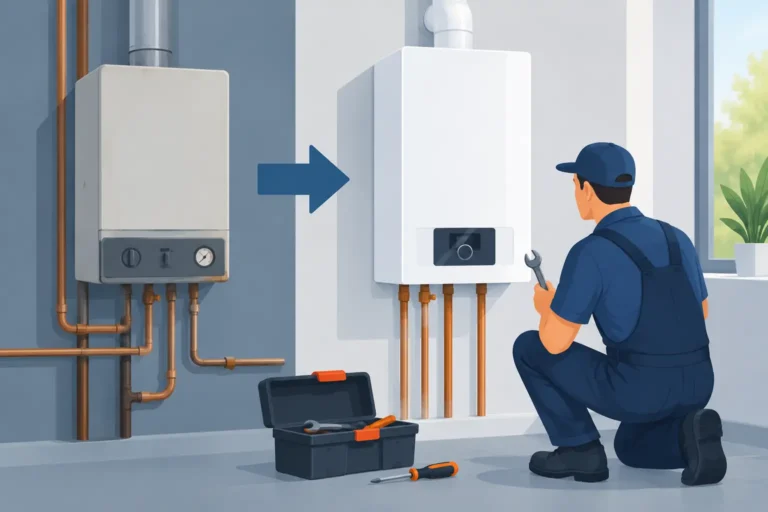
Older non-condensing boilers are a particular concern. They lose more heat through the flue than modern condensing models, meaning more of the fuel you pay for does not become useful heat in your home. A boiler replacement, where suitable, can reduce that waste significantly.
Check your bills against the same season last year rather than comparing January with July. If the figures and your comfort level both point in the wrong direction, it is worth arranging a professional assessment.
2. The boiler runs for a long time but rooms stay cold
Heating that seems permanently on, yet leaves bedrooms chilly or living areas slow to warm up, is one of the clearest signs of energy loss. The cause may be an ageing boiler that cannot operate efficiently, but it could also be poor controls, sludge in the system, undersized radiators or heat escaping through uninsulated walls and loft spaces.
This is why a whole-home view matters. Replacing a boiler in a badly insulated property may improve performance, but it will not stop warmth leaking out through the fabric of the building. ECO4 support can sometimes cover a combination of suitable heating and insulation measures, helping your home hold onto the heat it produces.
3. Your boiler is old and non-condensing
If your boiler was installed before 2005, it may be a non-condensing model. These older systems can be much less efficient than current alternatives because they do not recover as much heat from the gases leaving through the flue.
Age alone does not mean a boiler has failed, and a newer boiler can still waste energy if it is poorly set up or the property loses heat quickly. However, an old non-condensing boiler is a strong reason to check what help may be available. For eligible households, a funded boiler upgrade may remove the need to find a large upfront payment.
You can often identify the make, model and approximate installation date from paperwork or the label on the boiler. If you are unsure, an assessor or qualified heating professional can help establish what system you have.
4. Radiators heat unevenly or need constant attention
Cold patches at the bottom of radiators, one room that is always warmer than another, or radiators that need regular bleeding can all point to a system that is not distributing heat properly. The boiler may keep firing to compensate, using extra fuel while the house remains unevenly heated.
Sometimes the remedy is straightforward, such as balancing radiators, adjusting the thermostat or improving heating controls. In other cases, the system may need more substantial work. A property assessment helps identify whether the issue is the boiler itself, the central heating system, insulation, or a mix of these factors.
Do not ignore leaks, persistent pressure loss or discoloured water around the boiler. These are not simply efficiency concerns. Contact a qualified engineer, and if you smell gas or suspect carbon monoxide, follow the relevant emergency safety guidance immediately.
5. You hear frequent banging, whistling or cycling
A boiler that turns on and off repeatedly in short bursts is known as short cycling. It can happen when the boiler is oversized for demand, the controls are not working well, water flow is restricted, or a component is deteriorating. Frequent cycling increases wear and can waste fuel.
Banging, gurgling and whistling may have different causes, including trapped air, limescale or circulation problems. Noise does not always mean replacement is needed, but it does mean the system deserves attention. A reliable boiler should not demand constant resets, repeated pressure top-ups or a daily battle with error codes.
Keep a note of when the problem occurs and any error message displayed. It gives an engineer or assessor a clearer picture of what is happening.
6. Your hot water temperature is unreliable
When the shower swings from hot to cool, or taps take a long time to deliver hot water, households often compensate by running water longer. That wastes both water and energy. The problem may relate to the boiler, hot-water controls, pipework or the cylinder in a conventional system.
For a combi boiler, inconsistent hot water can be particularly frustrating because the system supplies heating and hot water directly. For homes with a cylinder, insulation around the cylinder and pipes can also affect how much heat is retained. The right improvement depends on your current system and property, rather than a one-size-fits-all fix.
7. You have to turn the thermostat up high to feel comfortable
A thermostat set unusually high is often a sign that heat is escaping faster than the home can retain it. It may also indicate that the thermostat is badly located, inaccurate or not communicating properly with the boiler. Turning it up can make the boiler run longer, but it will not solve draughts, thin insulation or cold external walls.
Before assuming the boiler is the only issue, consider the feel of the home. Are rooms cold near outside walls? Is the loft insulated? Do you notice draughts around windows and doors? Heating and insulation work best together. A warmer fabric means the boiler does not have to work as hard to maintain a comfortable temperature.
8. The boiler needs regular repairs
An occasional repair can be sensible, especially on a relatively modern boiler with a minor fault. But repeated call-outs, unavailable parts and a growing list of repairs can become expensive. More importantly, a boiler that is becoming unreliable may operate less efficiently between repairs.
There is a trade-off here. Replacing a functioning boiler privately is not always the best financial decision. Yet where an old, inefficient system is contributing to high bills and the household meets the funding criteria, exploring grant support can be a practical alternative to paying for another temporary repair.
9. Your home feels damp, draughty or difficult to heat
Boilers waste energy in context. If your property is damp, poorly insulated or full of cold spots, even an efficient boiler will have to work harder. This is especially common in older homes with solid walls, little loft insulation or inadequate cavity-wall insulation.
A proper assessment looks beyond the boiler to identify improvements that can make a lasting difference to warmth, bills and carbon emissions. Depending on eligibility and survey findings, this may include insulation, central heating improvements, a replacement boiler or an air source heat pump. Not every measure suits every home, which is why the assessment comes before funding approval.
What to do if these signs sound familiar
Start by checking that your heating controls are set sensibly and that your annual boiler service is up to date. Then gather basic details: your energy bills, the boiler make and age if known, and any recurring faults or cold rooms. This information makes an assessment more useful.
If you are a homeowner or private tenant on a qualifying benefit, receive the Warm Home Discount core group, or may qualify through your local authority, it is worth checking ECO4 eligibility. Vellurex can help make the process simple and stress-free, from a free eligibility check to the home assessment, ECO4 paperwork and installation coordination. Private tenants will usually need their landlord’s permission for works to go ahead.
You should not have to choose between a cold home and an unaffordable bill. A free assessment can show whether your boiler, heating system and insulation are costing you more than necessary – and whether funded improvements could help your home stay warmer for less.