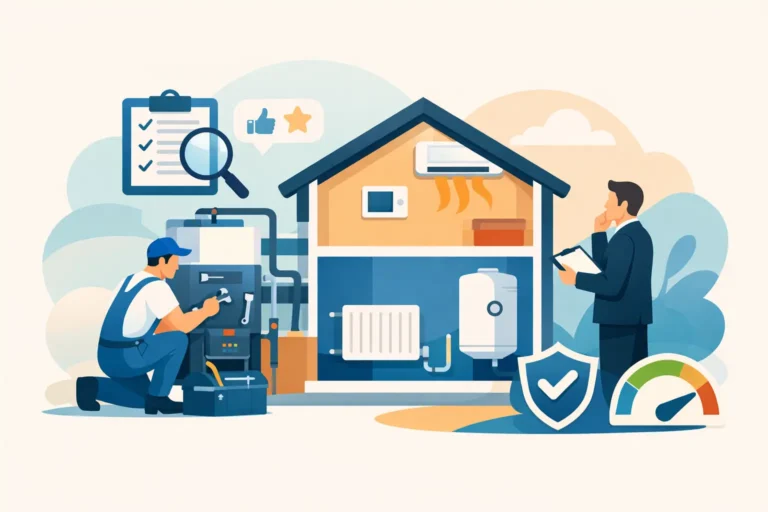
How to Access ECO4 Support for a Warmer Home
When your boiler struggles to heat the house, rooms feel cold despite the heating being on, and energy bills keep rising, a major upgrade can feel out of reach. Knowing how to access ECO4 support can make that next step far more manageable. The scheme was designed to help qualifying households improve inefficient homes with funded heating and insulation measures, without facing the usual upfront cost.
ECO4 is not a cash payment sent to your bank account. It is funding for practical home improvements, arranged through approved routes and based on your circumstances and property. The aim is simple: help households in harder-to-heat homes reduce energy use, improve comfort and lower carbon emissions.
There is one timing point to be aware of. ECO4 was scheduled to run until 31 March 2026. If you are reading this after that date, do not assume new applications are still available. A specialist provider can confirm whether an ECO4 case already in progress can continue, or whether another live funding route may be suitable for your home.
What ECO4 support can help pay for
ECO4 support focuses on measures that make a meaningful difference to an inefficient property. What is available depends on the condition of your home, its current heating system and the funding rules that apply to your case.
For some households, the right solution is first time central heating. This can be particularly valuable where a property has never had a central heating system and relies on electric storage heaters, room heaters or another expensive-to-run arrangement. Installing a full system can transform how evenly and reliably the home is heated.
Other homes may be considered for a replacement of an old non-condensing boiler, a more efficient boiler upgrade, central heating improvements or an air source heat pump. Insulation is often just as important. Loft, cavity wall, internal wall and solid wall insulation can reduce the amount of heat escaping from the property, so your heating does not have to work as hard.
The best measure is not always the one you initially ask about. A new heating system in a poorly insulated home may not provide the savings you expect. Equally, insulation work may need to be considered before certain low-carbon heating options are appropriate. A property assessment helps identify the package that makes practical sense for your home.
Who may be eligible for ECO4 funding?
Eligibility is based on a combination of household circumstances and property suitability. You may have a route to support if you are a homeowner or private tenant on a qualifying benefit, receive the Warm Home Discount in the core group, or meet criteria set through your local authority.
Private tenants can be eligible, but the landlord will normally need to give permission for work to take place. Homeowners need to be able to authorise improvements too. Social housing and newly built, energy-efficient properties are generally treated differently, so it is always worth having your individual circumstances checked rather than relying on general advice.
Your home matters as much as your income route. ECO4 was intended for properties that are costly to heat or perform poorly from an energy-efficiency perspective. An older home with inadequate insulation, an outdated heating system or a low energy rating may be more likely to need support than a property that has already been extensively upgraded.
Local authority eligibility can help households who do not receive a qualifying benefit but are still on a low income, vulnerable to cold or living in an inefficient property. These routes are subject to local rules and available funding, which is why a quick eligibility check is more useful than trying to work it out from a long list of criteria alone.
How to access ECO4 support in three practical steps
The process should not involve you chasing multiple organisations or trying to interpret technical funding guidance on your own. A good grant-access service keeps the journey clear from the first conversation to installation.
1. Start with a free eligibility check
The first step is to share a few straightforward details: your postcode, whether you own or privately rent your home, the benefits or support you receive, and the heating issues you are experiencing. You may also be asked about your current boiler, insulation and Energy Performance Certificate if you have one.
This is an initial check, not a guarantee of funding. It helps establish whether your household could fit a qualifying route and whether your property is likely to need an eligible improvement. Be honest and specific, especially about old heating equipment, cold rooms and high bills. Those details help build an accurate picture.
2. Arrange a property assessment
If your initial details suggest you may be eligible, the next stage is a free property assessment. An assessor looks at the home itself, including its construction, insulation, ventilation and existing heating system. They may check the loft, inspect the boiler or heating controls, and identify where warmth is being lost.
This visit protects you as well as the funding programme. It means recommendations should be based on the property rather than a one-size-fits-all promise. For example, a solid-wall house may need a different insulation approach from a property with cavity walls, while a heat pump may be assessed differently from a boiler replacement.
You should ask questions during the assessment. Find out what work is being proposed, how long it may take, whether you need to prepare any rooms and what disruption to expect. A clear answer is a good sign that the installation has been properly planned.
3. Complete funding approval and installation
Once the proposed measures have been confirmed, the paperwork is prepared for funding approval. This is where many households feel overwhelmed, particularly when evidence of benefits, tenancy permission or property details is needed. You should not have to manage it alone.
At Vellurex, we handle your ECO4 paperwork and explain what information is needed at each stage, helping make the process simple and stress-free. Approval must be confirmed before work begins. Do not agree to pay a deposit for work that has been described as fully funded without receiving a clear written explanation of why it is required.
When approval is in place, an installation date can be arranged. The installer should explain the work, safety arrangements and any aftercare information. Keep copies of your documents and ask for operating guidance if a new heating system or control is being fitted.
Documents that can make the process quicker
You do not need to gather every document before asking for help, but having key information ready can reduce delays. This may include proof of identity and address, evidence of qualifying benefits or Warm Home Discount status, and landlord consent if you rent privately.
It can also help to have recent energy bills, photographs of your boiler or heating system, and any EPC information you hold. These are useful starting points, not reasons to put off an eligibility check. If something is missing, your provider should tell you what is needed and why.
Questions to ask before you agree to work
Funding can be valuable, but you should still understand the work being carried out in your home. Ask whether the improvements are fully funded in your circumstances, what is included, and whether any contribution could apply. Request a clear explanation of the recommended measures and how they are expected to improve warmth or reduce heat loss.
It is also sensible to ask who will carry out the installation, how long it will take and who to contact if you have a concern afterwards. A trustworthy provider will be clear about eligibility being subject to checks and will not pressure you to sign before you understand the proposal.
Be cautious of cold callers who promise a free boiler without checking your property or circumstances. Genuine funded upgrades require assessment, evidence and approval. A careful process may take longer than an instant promise, but it is far more likely to deliver the right improvement for your home.
If ECO4 is no longer open to new cases
Because ECO4 had a fixed end date, availability can change. If new ECO4 applications are no longer being accepted, this does not necessarily mean you have no options. Depending on where you live and your circumstances, there may be local authority schemes, supplier-led support or other energy-efficiency funding programmes to explore.
The same preparation still helps: understand your heating problem, keep evidence of your household circumstances and arrange a property assessment where available. Funding rules change, but a clear picture of what your home needs puts you in a stronger position to act when suitable support is available.
A cold, expensive-to-heat home should not be something you simply put up with. Start with a free eligibility conversation, ask for clear advice, and take one practical step towards a warmer home with lower energy costs.