What Is a Non-Condensing Boiler and Why Replace It?
A boiler that takes longer to warm the radiators, leaves some rooms cold and makes winter bills feel unmanageable may be costing more than you realise. So, what is a non-condensing boiler? Put simply, it is an older style of gas boiler that lets a large amount of heat escape through its flue rather than reusing it to warm your home.
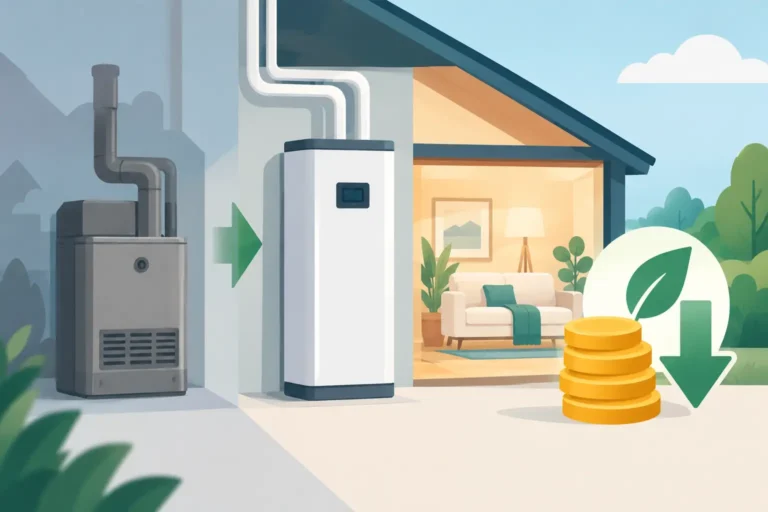
Many UK homes still have one, particularly properties with heating systems installed before modern efficiency standards became common. Replacing an inefficient boiler can make a meaningful difference to comfort, running costs and household carbon emissions. For eligible households, funding support may also remove the need to pay the full cost upfront.
What is a non-condensing boiler?
A non-condensing boiler heats water for your radiators and taps by burning gas. During that process, it produces hot gases that leave the property through a flue. Those gases contain useful heat, but a non-condensing boiler sends most of it outside.
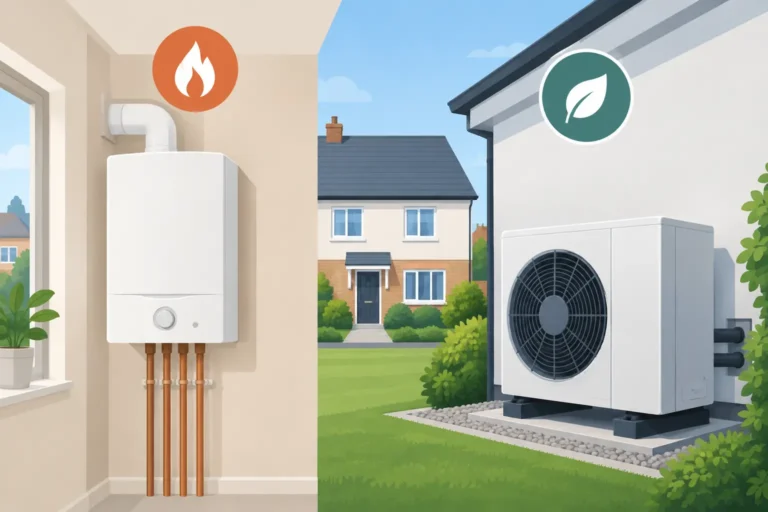
A modern condensing boiler is designed to capture much of this otherwise wasted heat. It cools the flue gases enough for water vapour inside them to turn into liquid, known as condensate. The recovered heat is then used to support the heating process, so less gas is needed to achieve the same result.
The word “condensing” refers to this recovery process, not whether the boiler is leaking or producing visible condensation in your home. A condensing boiler safely drains the small amount of liquid it creates through a condensate pipe.
Non-condensing boilers are often less efficient because they cannot recover this heat. In practical terms, more of the fuel you pay for is lost through the flue.
How can you tell if you have a non-condensing boiler?
Age is one useful clue. If your gas boiler was fitted many years ago and has never been replaced, it may be non-condensing. However, age alone is not a guarantee. The boiler type, installation details and any previous upgrades all matter.
A condensing boiler usually has a visible plastic condensate pipe leading away from the unit, often towards a drain. Its flue may also be made from plastic rather than metal. A non-condensing model may have an older-looking metal flue and no condensate pipe.
You may also hear an older boiler described as a conventional, regular, heat-only or back boiler. These labels describe how a heating system supplies hot water and heating, rather than confirming whether it is condensing. For example, a modern regular boiler can still be a condensing model.
The most reliable way to find out is to arrange a professional assessment. An installer can identify the boiler, check its condition and explain whether a replacement or wider heating upgrade is likely to be suitable for your property.
Why non-condensing boilers can be expensive to run
Older non-condensing boilers commonly have efficiency ratings well below those of modern condensing alternatives. Some may convert only around 60 to 70 per cent of the fuel they use into useful heat, although actual performance depends on the specific boiler, maintenance history and how it is operated.
Modern condensing boilers are much more efficient when correctly installed and controlled. They are designed to use less gas for the same level of warmth. That can reduce energy use, although the amount a household saves will depend on insulation, radiator controls, thermostat settings, property size and daily heating habits.
An inefficient boiler does not act alone. If a home has poorly insulated loft space, uninsulated solid walls or draughty areas, heat can still escape quickly after the boiler has produced it. That is why a good home assessment looks at the property as a whole, not simply the boiler on the wall.
For households already limiting heating because of high bills, an upgrade can also be about wellbeing. Reliable, controllable heating helps make bedrooms, living spaces and bathrooms more comfortable during colder months.
Is it time to replace an old boiler?
A non-condensing boiler does not always need replacing immediately just because it is old. If it is safe, working reliably and has been properly maintained, the decision may come down to household circumstances and affordability.
That said, replacement is worth considering if the boiler breaks down repeatedly, needs parts that are difficult to find, struggles to heat the home, makes unusual noises or results in consistently high gas use. A new system may also be sensible when major repairs would cost a substantial proportion of a replacement.
Gas safety comes first. If you smell gas, notice a damaged flue, or have concerns about carbon monoxide, contact the appropriate emergency or qualified Gas Safe professional straight away. Never attempt to repair or alter a boiler yourself.
Since changes to building standards, replacement gas boilers have generally needed to be high-efficiency condensing models, except in limited cases where this is not practical. A qualified installer can advise on the correct option for your home and its existing pipework, radiators and hot-water needs.
What happens when a non-condensing boiler is replaced?
The right replacement depends on the property and household. A combi boiler provides heating and hot water from one compact unit, which can suit smaller homes without a hot-water cylinder. A system or regular boiler may be more suitable for larger homes, homes with more than one bathroom or properties that need to retain a cylinder.
In some cases, the best answer may not be another gas boiler. Air source heat pumps can offer a lower-carbon way to heat a suitable home, particularly where insulation and radiator capacity are addressed as part of the plan. They work differently from boilers and need a careful survey, so they are not a like-for-like decision.
A proper assessment should consider the condition of your existing heating system, your insulation levels, available space, hot-water demand and the energy performance of the property. It should also identify whether related improvements, such as loft or wall insulation, would help the new system perform better.
The installation itself may involve removing the old boiler, fitting the new appliance, adapting pipework, installing controls and testing the completed system. If a condensing boiler is fitted, the installer will also need to provide a safe route for the condensate pipe. The work required varies, which is why a survey is more useful than a one-size-fits-all quote.
Can ECO4 funding help with an old non-condensing boiler?
For households on lower incomes or receiving qualifying support, government-backed energy-efficiency funding may help with improvements to inefficient heating and insulation. ECO4 has been designed to help improve homes that are costly to heat, but eligibility, available measures and funding rules can vary.
A household may be considered based on factors such as benefits, Warm Home Discount core-group status, local authority eligibility criteria, property type and its current energy efficiency. Homeowners and private tenants may both qualify in certain circumstances. Landlord permission is normally needed for tenants before work can go ahead.
Funding is not automatic, and not every old boiler will qualify for the same measure. In many cases, assessors will look at insulation first because reducing heat loss can be essential to achieving a lasting reduction in bills. The outcome should be based on what will make the greatest practical improvement to the home.
Vellurex can make this process easier with a free eligibility check and property assessment. We handle your ECO4 paperwork, explain the available options clearly and support you through funding approval and installation coordination. Where a fully funded improvement is available, it can help remove a major barrier to replacing inefficient heating.
A warmer home starts with the right assessment
An old non-condensing boiler may be using more gas than necessary, but the most useful next step is not to guess at a replacement. It is to understand how your whole home is losing and using heat. A free eligibility check can show whether funded support may be available and help you move towards a warmer, lower-cost and greener property without the stress of managing the process alone.