ECO4 Provider Review Criteria for UK Homes
A heating grant can sound straightforward until you are asked for documents, a survey is booked, and different companies offer different answers. Using clear ECO4 provider review criteria helps you look beyond a star rating and choose a provider that makes the process easier, clearer and more reassuring from the first call to installation.
For households dealing with high bills, cold rooms or an old boiler, the right provider should not add more pressure. They should explain what may be available, arrange a suitable assessment, handle the ECO4 paperwork where applicable, and keep you informed about what will happen in your home.
Check the scheme position before comparing providers
ECO4 had a delivery end date of 31 March 2026. If you are reading this after that date, do not assume that new ECO4 funding is still available simply because a website or advert mentions it. Ask each provider whether they are offering ECO4 work already approved before the deadline, or whether they are helping households through another current grant or local authority route.
A trustworthy provider will be direct about this. They will explain the funding route being considered, whether it is open in your area, and what information is needed before they can confirm anything. Be cautious of anyone who promises a fully funded boiler, heating system or insulation measure before checking your circumstances and property.
Funding decisions can depend on household income, benefits, the Warm Home Discount, local authority eligibility routes, the home’s energy performance and the measures already in place. There is no one-size-fits-all answer, and an honest provider will say so.
ECO4 provider review criteria that matter most
Reviews are most useful when they describe the customer experience in detail. A short comment saying “great service” is positive, but it tells you very little about whether the company kept appointments, explained the work, respected the property or dealt with paperwork properly.
Look for patterns across a range of reviews, particularly recent ones. A provider may have hundreds of ratings, but the detail in those ratings matters more than the total number. You want evidence that customers with homes and concerns similar to yours felt supported throughout the process.
1. Clear eligibility and funding explanations
Good reviews often mention clear communication. Customers should understand why they may qualify, what evidence is needed and what happens if funding cannot be confirmed. The provider should avoid jargon and explain the difference between an initial eligibility check and final approval.
For example, an initial conversation may suggest that you could be eligible because of a qualifying benefit or a local authority route. A home assessment may then show that a different measure is more appropriate, or that the property does not meet the technical requirements for the original proposal. This can be disappointing, but it is better than being promised work that cannot go ahead.
Look for reviewers who say the company answered questions patiently and did not pressure them to agree before they understood the work.
2. A thorough, respectful home assessment
A proper assessment is not a sales visit. It should help identify why the home is expensive to heat and which improvements could make the biggest difference. Depending on the property, this might involve looking at the boiler, radiators, insulation levels, ventilation, wall construction and the home’s existing energy rating.
Reviews should give you confidence that surveyors arrived when expected, explained what they were checking and treated the household respectfully. This is especially relevant if you are elderly, have young children, work from home or need extra support with appointments.
A provider should also be realistic about disruption. Loft insulation is different from internal wall insulation, and a first-time central heating installation is more involved than replacing an old non-condensing boiler. Honest reviews often mention the practical details – where equipment was fitted, how long work took, and whether the team kept the area tidy.
3. Help with paperwork, not just an application form
Grant paperwork can feel like the hardest part of an energy-efficiency upgrade. A helpful provider should tell you what documents are required, why they are needed and how to send them securely. They should not leave you chasing updates or guessing whether your application has progressed.
When reading reviews, pay attention to comments about communication between the assessment and installation. Did the customer know what stage they had reached? Were calls returned? Did someone explain any delay in funding approval or scheduling?
At Vellurex, the aim is to reduce this burden by guiding eligible households through the eligibility check, free property assessment and funding process. That does not mean promising an outcome before the evidence is reviewed. It means making each step simple and stress-free wherever possible.
4. Competent installation and aftercare
The installation is the point at which promises become real. Reviews should mention the workmanship as well as the friendliness of the installers. Look for comments on punctuality, cleanliness, clear explanations of the new system and whether the household was shown how to use the heating controls.
Aftercare matters too. A new heating system or insulation measure may take a little time to get used to. Customers should know who to contact if they have a question after the work is complete. If reviews repeatedly describe unanswered calls or unresolved faults, take that seriously.
It is also worth remembering that a good installation will not remove every source of heat loss overnight. A home with solid walls, draughts or ageing windows may still need further work. A reliable provider will set sensible expectations about comfort and potential savings rather than making sweeping claims.
Questions to ask before you agree to a survey
Reviews should support your decision, not replace a conversation. Before sharing personal documents or booking an appointment, ask how the provider checks eligibility, what measures they commonly arrange, and whether there could be any cost to you.
Ask who will carry out the survey and installation, how long approval normally takes, and what happens if the recommended measure changes after the assessment. If you rent privately, ask what permission is needed from your landlord. Homeowners should ask whether any preparation is required before work begins.
You can also ask how the provider handles complaints and aftercare. A clear, calm answer is a good sign. If the person avoids direct questions, rushes you or makes funding sound guaranteed without a proper check, it may be best to pause.
Red flags to watch for in provider reviews
One unhappy review does not automatically mean a company is unsuitable. Delays can happen because of funding checks, supply issues, weather or unexpected findings in the property. What matters is whether the provider communicates properly and resolves problems fairly.
Be more cautious when reviews repeatedly mention the same concerns:
- Pressure to sign forms or agree to work immediately.
- Promises of guaranteed funding before an assessment.
- Missed appointments without explanation or follow-up.
- Confusion over what work was approved and what was installed.
- Poor communication once paperwork had been submitted.
- Work left unfinished, untidy or without clear instructions for use.
Also check whether reviews appear overly vague or unusually repetitive. Genuine feedback tends to include practical details about the survey, the installers, the type of upgrade or the difference the household noticed afterwards.
Consider the measure, not just the provider
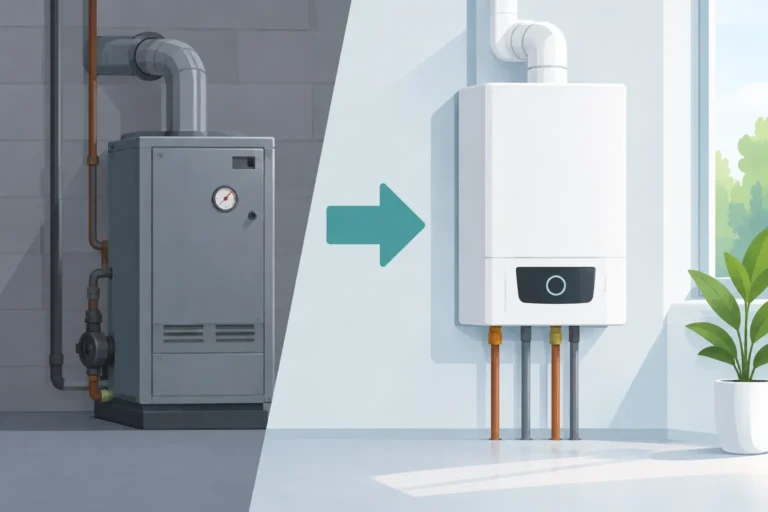
The best choice depends partly on what your home needs. If you have no fixed heating system, you may need a provider experienced in first-time central heating. If your boiler is old and inefficient, a replacement may be considered alongside insulation improvements. If heat is escaping through the loft or walls, insulation could be the priority before a new heating system is fitted.
This is why a provider should not sell one measure as the answer for every home. Air source heat pumps, boilers, insulation and central heating improvements all have different requirements. The right recommendation should reflect the condition of your property, how you use it and the funding route available at the time.
Make your decision with confidence
The strongest reviews usually have one thing in common: customers felt informed rather than pushed. They knew what was being checked, what was happening next and who to contact when they needed help.
Choose a provider that is willing to explain the funding position plainly, assess your home properly and manage the paperwork with care. A warmer, lower-cost home begins with a conversation that leaves you feeling clearer, not more confused.